During summer, Water daily or when the soil starts to become slightly dry at the top. During Winter season water once in 2 days or when the soil starts to become slightly dry at the top. Keep the soil lightly moist at all times, but do not overwater as this will cause brown spots and leaf drop. Curly or dry leaves suggest, the plant is dry and needs watering. Water in the early morning or late evening when temperatures are cooler. Always check your soil before watering.
Light
During summer season keep the plants in shaded area and during winter season plants can withstand direct/indirect light.
Temperature
During summer season or when the temperature is above 45°C place the plant in shaded area. During winter season or the when the temperature is below 45°C the plants can be directly placed in direct/indirect sunlight.
Fertilizer
Apply liquid fertilizer or slow release fertilizer once in 15 days. Always fertilizer the plants during the morning hours when the temperature is low. For best results use Folikraft ready to use Outdoor Plant Food / Flower Booster.
Plant Bio
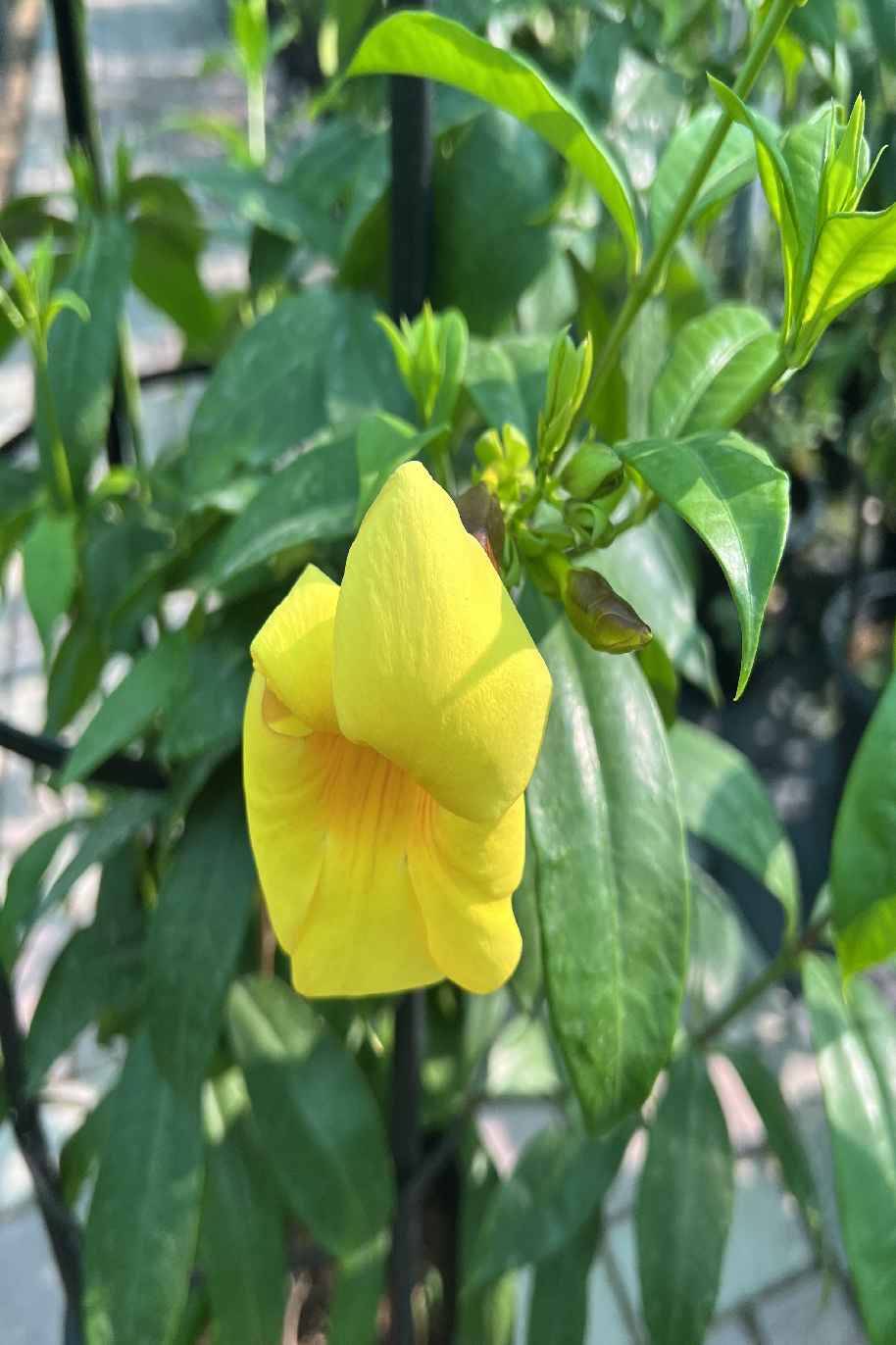
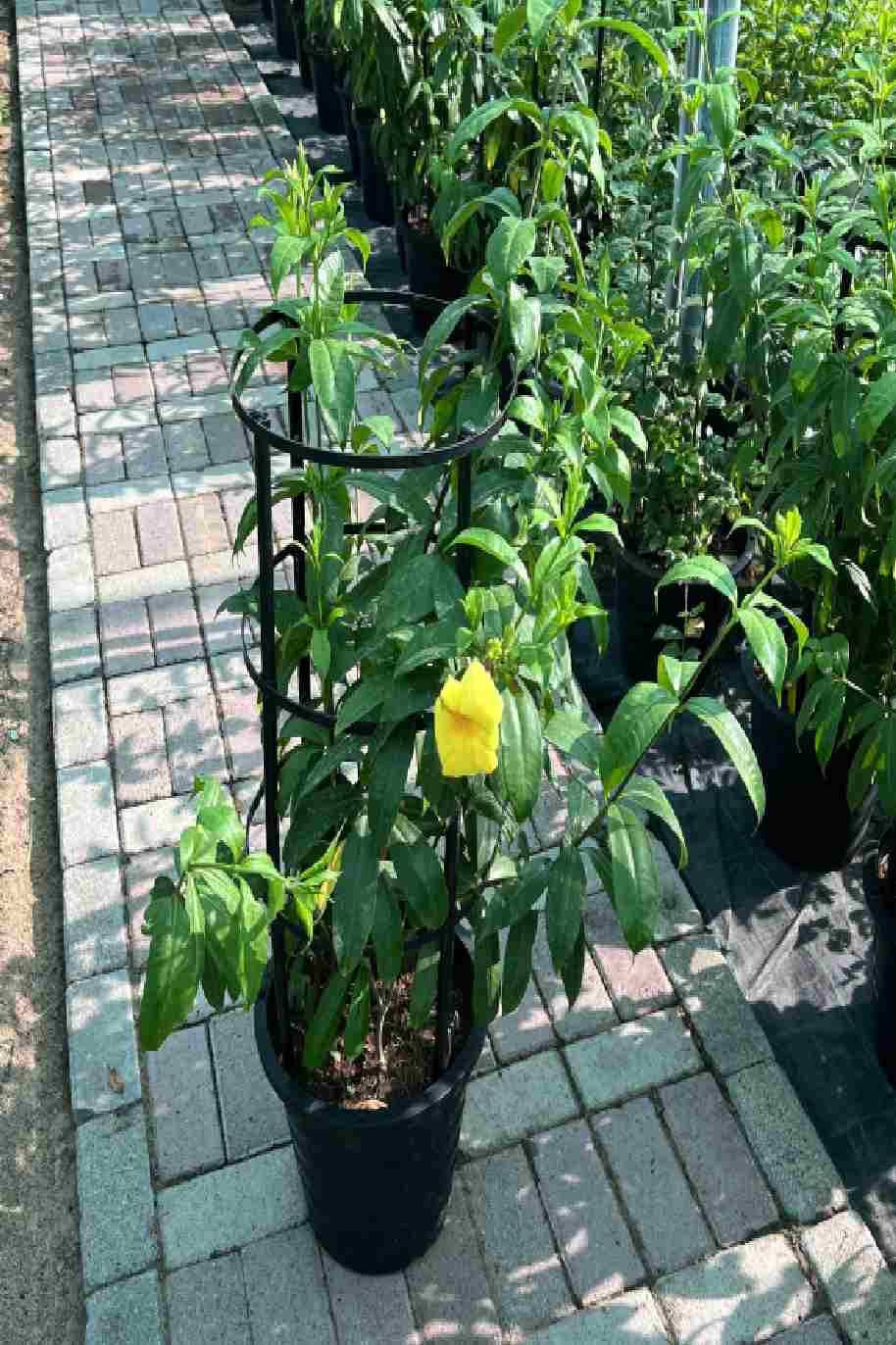
Allamanda cathartica, commonly known as the Golden Trumpet, is a tropical evergreen vine renowned for its large, bright yellow flowers. This vigorous and fast-growing plant is native to South and Central America and is often used in landscapes and gardens for its stunning blooms and lush foliage.
Description:
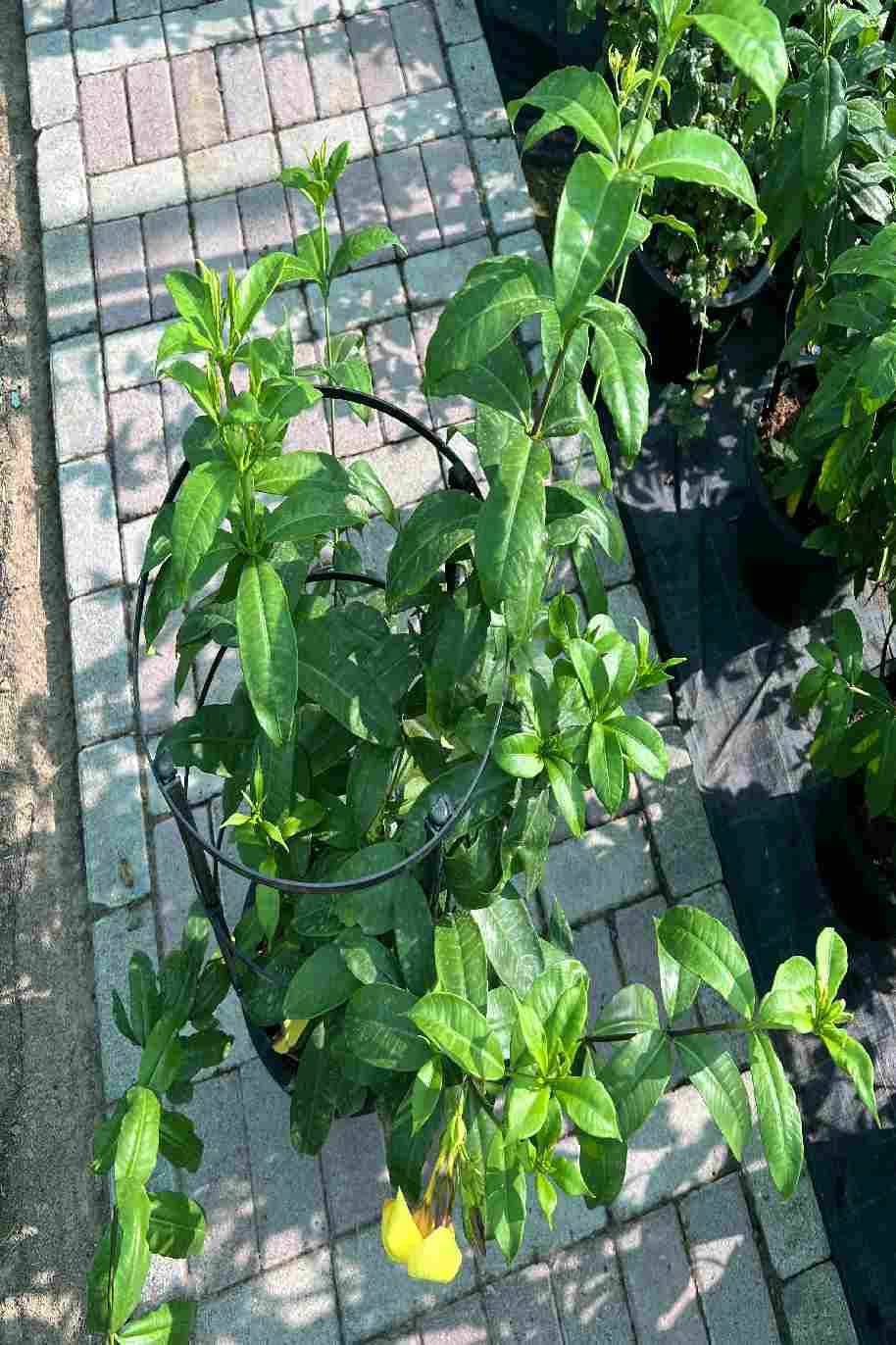
Foliage: The plant has glossy, dark green leaves that are ovate to elliptical in shape, measuring about 4-6 inches (10-15 cm) long. The leaves are arranged oppositely or in whorls of three or four along the stems. Flowers: Allamanda cathartica produces large, trumpet-shaped flowers that are bright yellow and can grow up to 5 inches (12 cm) across. The blooms have a slight fragrance and appear in clusters at the ends of the branches. Flowering typically occurs from late spring to fall. Growth Habit: This plant is a fast-growing vine that can reach lengths of 10-20 feet (3-6 meters) or more. It can be trained to grow on trellises, fences, or other supports, and can also be pruned into a shrub-like form.
Care Tips:
1. Sunlight:
Requirement: Full sun is essential for optimal growth and flowering. Ensure the plant receives at least 6-8 hours of direct sunlight daily. Effect of Insufficient Light: Inadequate sunlight can result in fewer blooms and leggy growth.
2. Temperature:
Optimal Range: Allamanda prefers warm temperatures between 65°F and 85°F (18°C to 29°C). Frost Sensitivity: This plant is sensitive to cold and should be protected from frost. In cooler climates, it can be grown in containers and brought indoors during the winter months.
3. Watering:
Frequency: Water the plant regularly to keep the soil consistently moist but not waterlogged. During the growing season, maintain even moisture levels. Winter Care: Reduce watering during the winter months when the plant's growth slows down.
4. Soil:
Type: Plant Allamanda in well-draining, fertile soil. A sandy or loamy soil mix enriched with organic matter is ideal. pH Preference: The plant thrives in slightly acidic to neutral soil (pH 5.5-7.0).
5. Fertilization:
Schedule: Feed the plant with a balanced, water-soluble fertilizer every 4-6 weeks during the growing season (spring through fall). Formulation: Use a fertilizer with a balanced ratio (e.g., 10-10-10 or 20-20-20) to promote healthy growth and abundant flowering.
6. Pruning:
Purpose: Prune the plant regularly to maintain its shape, encourage bushier growth, and remove dead or damaged stems. Timing: Pruning is best done in late winter or early spring before new growth begins.
7. Support:
Structure: Provide a sturdy support such as a trellis, arbor, or fence for the vine to climb. Regularly guide the stems onto the support structure to maintain an orderly appearance.
8. Pest and Disease Control:
Common Pests: Monitor for pests such as aphids, mealybugs, spider mites, and whiteflies. Treat infestations with insecticidal soap or neem oil. Disease Management: Ensure good air circulation around the plant to prevent fungal diseases like powdery mildew and root rot. Avoid overhead watering to minimize the risk of leaf diseases.
9. Propagation:
Method: Allamanda can be propagated from cuttings. Take 4-6 inch (10-15 cm) cuttings from healthy, semi-hardwood stems. Rooting Process: Dip the cut end in rooting hormone and plant it in a well-draining potting mix. Keep the soil moist and the cutting in a warm, bright location until roots develop.
By providing the right conditions and care, Allamanda cathartica can thrive and add a splash of bright color to your garden or landscape with its beautiful, golden trumpet-shaped flowers.
Frequently Asked Questions
During summer season keep the plants in shaded area and during winter season plants can withstand direct/indirect light.
During summer, Water daily or when the soil starts to become slightly dry at the top. During Winter season water once in 2 days or when the soil starts to become slightly dry at the top. Keep the soil lightly moist at all times, but do not overwater as this will cause brown spots and leaf drop. Curly or dry leaves suggest, the plant is dry and needs watering. Water in the early morning or late evening when temperatures are cooler. Always check your soil before watering.
During summer season or when the temperature is above 45°C place the plant in shaded area. During winter season or the when the temperature is below 45°C the plants can be directly placed in direct/indirect sunlight.
Apply liquid fertilizer or slow release fertilizer once in 15 days. Always fertilizer the plants during the morning hours when the temperature is low. For best results use Folikraft ready to use Outdoor Plant Food / Flower Booster.
"Sign up for our emails and get exclusive discounts on allyour favorite plants and gardening products!"
Now we’re in this together.
Your welcome email is on the way!
You’ve subscribed to: Plantshop.ae Newsletter. You can always manage your subscriptions through the “Unsubscribe” link at the foot of each Plantshop.ae newsletter.
We use cookies to improve your experience. Privacy Policy